
Speaker: Tulika Mitra, National University of Singapore
From FLOPS to Intelligence per Joule: The Case for Adaptive Dataflow
4 September 2026, 09:00-10:00
For decades, computing efficiency has been framed around delivering FLOPS and FLOPS per watt. Emerging AI workloads are forcing a different question: how much useful intelligence can be extracted from each joule? In large AI models, sparsity is increasingly necessary to make computation and memory tractable during inference. But exploiting sparsity is not automatically beneficial: the cost of discovering, routing, and orchestrating useful work can rival or exceed the cost of the computation itself. This challenge is amplified as low-precision formats reduce the cost of arithmetic, shifting the bottlenecks toward data movement and control.
In this talk, I will present adaptive dataflow as a foundation for efficient AI systems. Dataflow computing offers a natural way to expose dependences, exploit locality, and coordinate parallel execution. Adaptivity extends this paradigm to sparse, dynamic, and token-driven workloads whose useful structure may emerge only at runtime. I will argue that the central design question is not simply how to make dataflow more flexible, but where adaptivity should be introduced, where static structure should be preserved, and what that division of labor implies for the systems we build next.
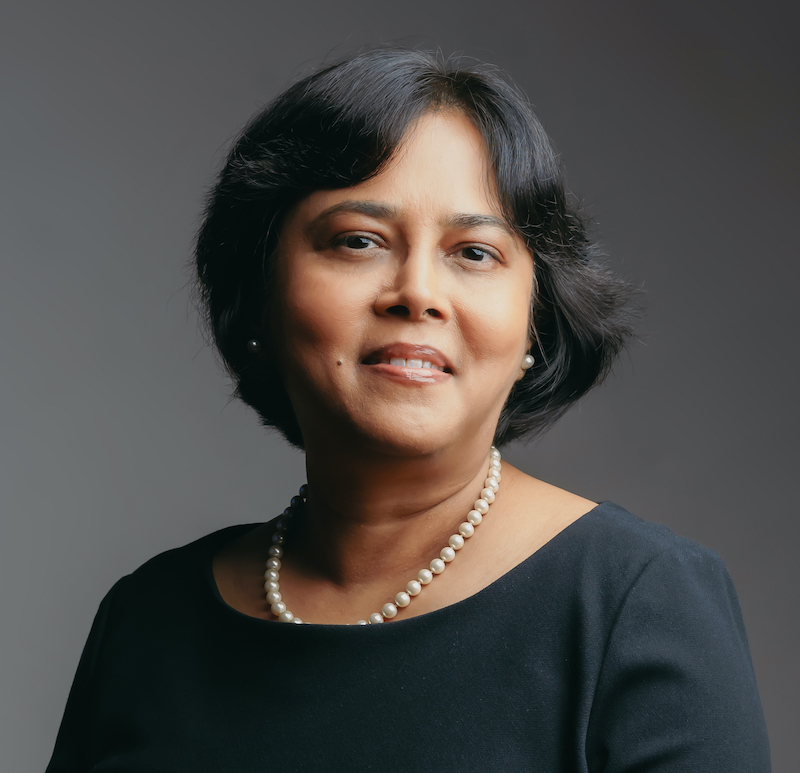
Speaker Bio
Tulika Mitra is Provost’s Chair Professor of Computer Science, Dean of Computing, and Vice Provost (Special Projects) at the National University of Singapore. Her research focuses on hardware-software co-designed systems that deliver more intelligence with less energy, while remaining fast, predictable, and reliable. She works on accelerator architectures and compilers, power and thermal management of heterogeneous systems, and worst-case execution time analysis of real-time systems. Her work has received the ESWEEK Test-of-Time Award and multiple Best Paper Awards. She has served as Editor-in-Chief of ACM Transactions on Embedded Computing Systems, General Chair and Program Chair of ICCAD, General Chair of ESWEEK, and is a recipient of the ACM SIGDA Distinguished Service Award.